Understanding your skin type is the first step toward creating an effective skincare routine. Every person’s skin has different needs based on oil production, moisture levels, sensitivity, and environmental factors. Using products without knowing your skin type can sometimes lead to irritation, dryness, excessive oiliness, or other skin concerns.
A proper skincare routine is not about following every popular trend. It is about choosing products and habits that match your skin’s unique requirements. When people understand their skin type, they can make better decisions about cleansers, moisturizers, treatments, and protection methods.
Skin type can change over time due to age, lifestyle, climate, hormones, stress, and skincare habits. Therefore, regularly understanding your skin condition helps maintain healthier and balanced skin.
Why Understanding Skin Type Is Important
Skin type determines how your skin reacts to different products and environmental conditions. A product that works well for one person may not provide the same results for another person.
For example, oily skin may require lightweight products that help manage excess oil, while dry skin usually needs products that support hydration and moisture retention.
Choosing skincare products according to skin type helps improve effectiveness and reduces the risk of unwanted reactions. It also allows people to create a simple routine that supports long-term skin health.
Understanding your skin type helps identify what your skin needs instead of using products based only on advertisements or trends.
The Five Main Skin Types
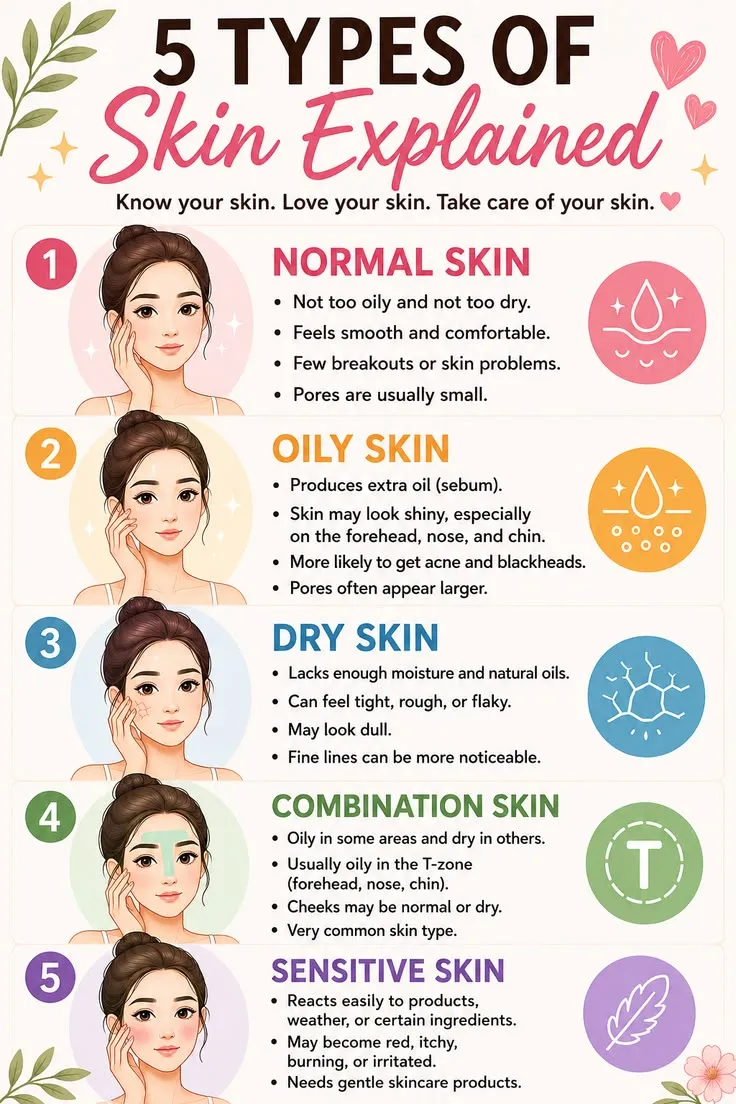
Skin is generally classified into five main types: normal skin, oily skin, dry skin, combination skin, and sensitive skin. Each type has different characteristics and requires different care approaches.
Normal Skin Type
Normal skin is considered well-balanced because it has a healthy balance of moisture and oil production. It usually does not feel excessively oily or dry and generally has a smooth appearance.
People with normal skin may experience fewer concerns, but maintaining a proper skincare routine is still important. Regular cleansing, moisturizing, and sun protection help preserve skin health.
Even balanced skin needs protection from environmental factors such as pollution, weather changes, and sun exposure. A consistent routine helps maintain the natural condition of normal skin.
Oily Skin Type
Oily skin occurs when the skin produces more natural oil, also known as sebum, than needed. This can make the skin appear shiny and may contribute to clogged pores and breakouts.
People with oily skin often notice increased oiliness in areas such as the forehead, nose, and chin. Factors like genetics, hormones, stress, and environmental conditions can influence oil production.
Managing oily skin requires a balanced approach. Over-cleansing or using harsh products can remove too much natural oil, which may cause the skin to produce even more oil.
Lightweight moisturizers, gentle cleansing, and products designed for oil balance can help maintain healthier skin.
Dry Skin Type
Dry skin occurs when the skin lacks sufficient moisture and struggles to maintain its natural protective barrier. It may feel tight, rough, or uncomfortable, especially after cleansing.
Dry skin can be influenced by weather conditions, aging, lifestyle habits, and the use of unsuitable skincare products.
People with dry skin generally benefit from products that support hydration and help maintain moisture levels. Gentle cleansing and regular moisturizing are important parts of caring for dry skin.
Protecting the skin barrier is essential because a weakened barrier can make the skin more vulnerable to irritation.
Combination Skin Type
Combination skin includes characteristics of both oily and dry skin. Usually, some areas of the face produce more oil while other areas remain normal or dry.
The T-zone, which includes the forehead, nose, and chin, is often more oily, while the cheeks may feel drier.
Combination skin can be challenging because different areas have different needs. A balanced skincare routine should address oil control in some areas while maintaining hydration in others.
Using suitable products and adjusting skincare habits based on changing skin conditions can help manage combination skin effectively.
Sensitive Skin Type
Sensitive skin reacts more easily to skincare products, environmental factors, or lifestyle changes. People with sensitive skin may experience redness, irritation, dryness, or discomfort.
Sensitive skin requires careful product selection and gentle skincare practices. Strong ingredients, fragrances, or harsh treatments may increase irritation for some individuals.
A simple skincare routine with gentle products is often helpful for maintaining comfort and protecting the skin barrier.
Understanding personal triggers is important because sensitivity levels can vary from person to person.
How to Identify Your Skin Type
Identifying your skin type does not always require complicated methods. Paying attention to how your skin behaves after cleansing and throughout the day can provide useful information.
After washing your face with a gentle cleanser, observe how your skin feels after some time. If your skin feels tight or uncomfortable, it may indicate dryness. If it becomes shiny quickly, it may indicate oiliness.
If some areas become oily while others feel dry, you may have combination skin. If your skin frequently reacts to products or environmental changes, it may be sensitive.
Professional skin consultations can also help people better understand their skin needs.
Factors That Affect Skin Type
Skin type is influenced by several internal and external factors. Genetics plays an important role in determining natural oil production and skin characteristics.
Age can also affect skin because moisture levels and oil production may change over time. Younger skin may produce more oil, while mature skin may require more hydration.
Weather conditions influence skin behavior as well. Dry climates may increase moisture loss, while humid environments may increase oil production.
Lifestyle factors such as diet, sleep quality, stress levels, and skincare habits can also affect overall skin condition.
Choosing Skincare Products According to Skin Type
Selecting products based on skin type improves the chances of maintaining healthy skin.
People with oily skin often prefer lightweight formulas that do not feel heavy. Those with dry skin usually need products that support hydration and moisture protection.
Combination skin may require different approaches for different areas, while sensitive skin benefits from gentle and minimal routines.
Regardless of skin type, some basic skincare steps are important for everyone, including cleansing, moisturizing, and protecting skin from sun exposure.
Common Skincare Mistakes to Avoid
One common mistake is using products only because they are popular without considering personal skin needs.
Another mistake is changing products too frequently. Skin often needs time to adjust to a routine, and constant changes can make it difficult to understand what works.
Using too many products at once can also increase the chance of irritation.
A simple, consistent routine based on skin type is often more effective than following complicated skincare trends.
Importance of Sun Protection for Every Skin Type
Sun protection is an essential part of skincare for all skin types. Exposure to ultraviolet rays can contribute to premature aging and other skin concerns.
Using appropriate sun protection helps protect the skin from environmental damage.
Even people with oily, dry, combination, or sensitive skin should include sun protection as part of their daily skincare habits.
Frequently Asked Questions (FAQs)
How can I know my skin type?
You can identify your skin type by observing how your skin feels after cleansing and throughout the day. Professional advice can also help with accurate identification.
Can skin type change over time?
Yes, skin type can change due to age, hormones, climate, lifestyle changes, and skincare habits.
Should everyone follow the same skincare routine?
No, skincare routines should be customized according to individual skin type and concerns.
Conclusion
Understanding different skin types is the foundation of making better skincare choices. Every skin type has unique characteristics and requires specific care to maintain balance and health.
By identifying whether your skin is normal, oily, dry, combination, or sensitive, you can select products and routines that match your needs. A thoughtful skincare approach focuses on consistency, protection, and maintaining the skin’s natural balance.
Healthy skin does not come from following every trend. It comes from understanding your skin, choosing suitable products, and developing habits that support long-term skin wellness.