Every business faces risks that can affect operations, financial performance, reputation, and long-term growth. Whether a company is small or large, unexpected challenges such as market changes, financial losses, cybersecurity threats, supply chain problems, or operational failures can create difficulties.
Business risk management helps companies identify, evaluate, and handle potential risks before they become serious problems. It is a structured approach that allows organizations to prepare for uncertainty and make better decisions.
Effective risk management does not mean eliminating every risk. Instead, it focuses on understanding possible challenges, reducing their impact, and creating strategies that help businesses continue operating successfully.
In today’s competitive environment, companies that manage risks effectively are better prepared for change, stronger during difficult situations, and more capable of achieving sustainable growth.
Understanding Business Risk Management
Business risk management is the process companies use to identify potential threats, analyze their possible impact, and develop plans to control or reduce those risks.
Risks can come from many areas, including financial conditions, market competition, technology changes, legal requirements, employee issues, and external events.
A strong risk management strategy helps businesses avoid unexpected disruptions and improve decision-making.
Instead of reacting to problems after they occur, companies use risk management to prepare in advance.
This proactive approach allows organizations to protect resources, maintain stability, and create better opportunities for growth.
Importance of Risk Management for Businesses
Risk management is important because uncertainty is a natural part of running a business.
Companies operate in changing environments where customer preferences, economic conditions, regulations, and technology continue to evolve.
Without proper planning, unexpected events can create financial losses and operational challenges.
Risk management helps businesses:
Identify potential problems before they occur.
Protect financial resources and company assets.
Improve decision-making processes.
Maintain customer trust and business reputation.
Prepare for emergencies and unexpected situations.
A company with effective risk management practices can respond faster and recover more efficiently when challenges appear.
Identifying Different Types of Business Risks
Businesses face various types of risks depending on their industry, size, and operations.
Understanding different risk categories is the first step toward effective management.
Financial Risks
Financial risks involve situations that can affect a company’s money and profitability.
These risks may include cash flow problems, rising costs, unexpected expenses, investment losses, or changes in market conditions.
Companies manage financial risks by maintaining proper budgeting, monitoring expenses, improving financial planning, and creating emergency reserves.
Strong financial management helps businesses remain stable during uncertain periods.
Operational Risks
Operational risks affect daily business activities.
These risks may result from equipment failures, inefficient processes, employee mistakes, supply chain disruptions, or system problems.
Companies reduce operational risks by improving workflows, training employees, maintaining equipment, and creating backup plans.
Efficient operations help businesses provide consistent products and services.
Market Risks
Market risks occur due to changes in customer demand, competition, economic conditions, or industry trends.
A company may experience challenges if customer preferences change or new competitors enter the market.
Businesses manage market risks by conducting research, monitoring trends, understanding customers, and adapting their strategies.
Flexibility helps companies remain competitive in changing markets.
Cybersecurity Risks
Technology has created new opportunities for businesses, but it has also increased digital risks.
Cybersecurity risks include data breaches, online attacks, system failures, and unauthorized access to sensitive information.
Companies manage cybersecurity risks through strong security systems, employee awareness training, regular updates, and data protection practices.
Protecting digital information is essential for maintaining customer trust and business continuity.
Legal and Compliance Risks
Businesses must follow laws, regulations, and industry standards.
Legal risks can occur when companies fail to meet required rules or regulations.
Organizations manage these risks by staying updated with legal requirements, maintaining proper documentation, and following compliance procedures.
Strong compliance practices protect businesses from penalties and reputational damage.
Steps Companies Follow to Manage Business Risks
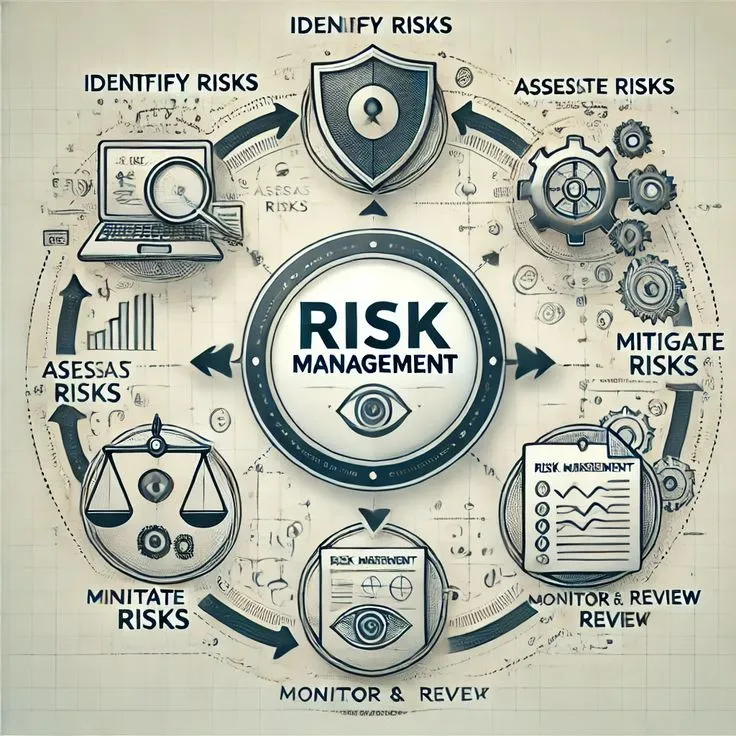
Effective risk management usually follows a structured process.
Risk Identification
The first step is identifying possible risks that could affect business operations.
Companies analyze internal and external factors to understand potential threats.
This may include reviewing financial reports, operational processes, market conditions, technology systems, and industry changes.
Early identification allows businesses to prepare suitable solutions.
Risk Assessment and Analysis
After identifying risks, companies evaluate their potential impact and likelihood.
Not every risk has the same level of importance. Some risks may have a small impact, while others may seriously affect business survival.
Risk assessment helps companies prioritize important threats and focus resources on managing them effectively.
Developing Risk Management Strategies
Once risks are analyzed, companies create strategies to reduce their impact.
Common risk management strategies include:
Avoiding certain risks when possible.
Reducing the impact through preventive measures.
Sharing risks through partnerships or insurance.
Accepting manageable risks with proper preparation.
The right strategy depends on the type and level of risk.
Implementing Risk Controls
Risk controls are actions taken to prevent or minimize problems.
Examples include improving security systems, creating emergency procedures, training employees, and establishing quality control processes.
Effective controls reduce the chances of major disruptions.
Companies should regularly review these controls to ensure they remain effective.
Monitoring and Reviewing Risks
Risk management is an ongoing process.
Business conditions change constantly, so companies must regularly monitor risks and update their strategies.
New technologies, market changes, and global events can create new challenges.
Continuous monitoring helps businesses stay prepared and adjust their plans when necessary.
Role of Leadership in Risk Management
Business leaders play an important role in creating effective risk management systems.
Leadership teams are responsible for setting priorities, creating policies, and ensuring employees understand risk procedures.
A strong risk management culture begins with leadership support.
When leaders encourage careful planning and responsible decision-making, employees become more aware of potential risks.
Importance of Employee Awareness
Employees are an important part of risk management because their actions can directly affect business safety and performance.
Training employees about security practices, workplace safety, compliance rules, and operational procedures reduces mistakes.
A well-informed workforce can identify problems quickly and contribute to better risk prevention.
Using Technology for Better Risk Management
Modern businesses use technology to improve risk management.
Digital tools help companies monitor operations, analyze data, detect threats, and improve decision-making.
Technology can support areas such as cybersecurity protection, financial monitoring, inventory management, and customer data security.
However, businesses must continuously update their technology systems to handle new challenges.
Benefits of Effective Business Risk Management
Strong risk management provides several advantages for companies.
It improves business stability by reducing unexpected disruptions.
It helps protect company resources and financial performance.
It increases confidence among customers, employees, and business partners.
It supports better strategic planning and decision-making.
It allows companies to respond quickly during emergencies.
Effective risk management creates a stronger foundation for long-term success.
Common Risk Management Mistakes Businesses Should Avoid
Some companies make the mistake of ignoring risks until problems occur.
Another common mistake is focusing only on financial risks while ignoring operational, technological, or reputation-related challenges.
Businesses may also fail to update their risk strategies as conditions change.
Successful risk management requires continuous attention, planning, and improvement.
Frequently Asked Questions (FAQs)
What is business risk management?
Business risk management is the process of identifying, analyzing, and controlling risks that may affect company operations and growth.
Why is risk management important for companies?
Risk management helps companies prepare for challenges, protect resources, improve decisions, and maintain stability.
Can businesses completely eliminate risks?
No, businesses cannot remove all risks, but they can reduce their impact through proper planning and risk management strategies.
Conclusion
Business risk management is an essential part of running a successful organization. Companies that understand and manage risks effectively are better prepared to handle uncertainty and maintain long-term growth.
By identifying risks, analyzing their impact, creating preventive strategies, and continuously monitoring changes, businesses can protect their operations and improve decision-making.
Risk management is not only about avoiding problems; it is about creating confidence, improving resilience, and building a stronger future. In a constantly changing business environment, companies with effective risk management practices have a greater ability to adapt and succeed.