Financial education plays an important role in helping students understand how money works and how to make responsible financial decisions. In today’s world, students face many financial choices, including managing expenses, saving money, understanding banking services, and planning for future goals.
Learning financial skills at an early age helps students develop confidence and independence. It teaches them how to manage resources wisely, avoid unnecessary financial mistakes, and build healthy money habits that can benefit them throughout life.
Financial education is not only about learning how to save money. It includes understanding budgeting, investing basics, credit management, financial planning, and making informed choices. Students who develop these skills early are better prepared to handle financial responsibilities in adulthood.
Understanding Financial Education for Students
Financial education refers to the process of learning important money management concepts and developing the skills needed to make smart financial decisions.
For students, financial education focuses on basic concepts such as income, expenses, saving, budgeting, banking, and responsible spending. It helps young people understand the value of money and the importance of planning.
Many financial problems in adulthood occur because people do not receive proper guidance about money management. Introducing financial education during student life creates a strong foundation for better financial habits in the future.
Developing Better Money Management Skills
One of the biggest benefits of financial education is that it helps students develop effective money management skills.
Students learn how to track their income and expenses, understand their spending habits, and make better financial choices. Budgeting skills help them organize their money and avoid unnecessary spending.
For example, students who understand budgeting can separate essential expenses from optional purchases. This allows them to use their money more effectively and prepare for future needs.
Money management skills developed during student life can continue to provide benefits throughout adulthood.
Teaching the Importance of Saving Money
Saving is one of the most important financial habits that students can learn.
Financial education teaches students why saving money is necessary and how small savings can create long-term benefits. It helps them understand the importance of preparing for unexpected situations and future goals.
Students who develop saving habits early are more likely to manage money responsibly later in life. Even saving small amounts regularly can help create financial discipline.
Learning about savings also introduces students to concepts such as emergency funds and financial security.
Helping Students Create Realistic Budgets
Budgeting is a practical skill that allows students to control their finances effectively.
A budget helps students understand where their money goes and how they can manage expenses according to their priorities.
Financial education teaches students how to create simple budgets by comparing income with expenses. This skill helps them avoid overspending and encourages responsible financial behavior.
Whether managing pocket money, scholarships, part-time income, or personal expenses, budgeting helps students make informed decisions.
Improving Financial Decision-Making Skills
Students make financial decisions regularly, from purchasing products to choosing educational opportunities. Financial education helps them evaluate these decisions carefully.
Understanding basic financial concepts allows students to compare options, consider long-term effects, and avoid impulsive spending.
Financial knowledge helps students understand that every financial choice has consequences. This awareness encourages thoughtful decision-making instead of emotional or unnecessary purchases.
Better financial decisions can lead to improved financial stability in the future.
Reducing the Risk of Financial Mistakes
Many financial problems occur because people lack knowledge about money management. Students who receive financial education are more aware of common mistakes and how to avoid them.
They learn about responsible borrowing, understanding interest rates, managing expenses, and avoiding unnecessary debt.
Early financial awareness helps students recognize risky financial situations and make safer choices.
Learning from financial education can prevent costly mistakes that may affect their future financial health.
Understanding Banking and Digital Payments
Modern students regularly use banking services and digital payment methods. Financial education helps them understand how these systems work.
Students can learn about bank accounts, online transactions, payment security, and responsible use of digital financial tools.
As digital payments become more common, understanding financial security is increasingly important. Financial education teaches students how to protect their money and personal information while using online platforms.
This knowledge helps students become more confident in managing modern financial systems.
Building Confidence and Financial Independence
Financial education helps students become more independent by teaching them how to manage their own money.
When students understand financial concepts, they feel more confident making decisions related to spending, saving, and planning.
Financial independence does not mean having large amounts of money. It means having the ability to manage available resources responsibly.
Students with strong financial knowledge are better prepared to handle future responsibilities such as education costs, career planning, and personal expenses.
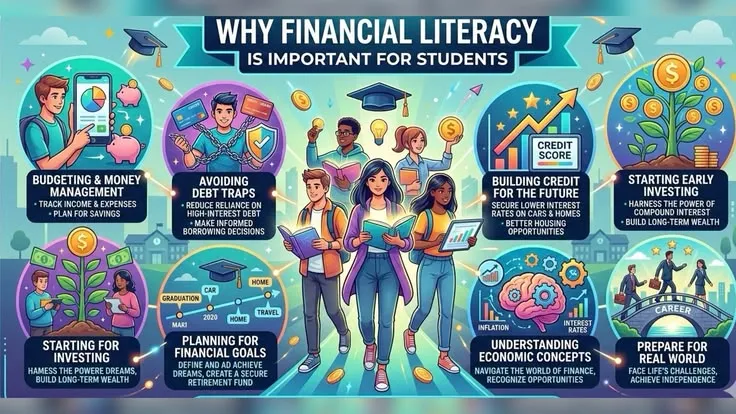
Preparing Students for Future Careers and Responsibilities
Financial skills are valuable not only for personal life but also for professional growth.
As students enter the workforce, they need to understand income management, taxes, savings, investments, and financial planning.
Financial education prepares students for real-world responsibilities after completing their studies.
It helps them understand how to manage salaries, plan future goals, and create financial stability.
These skills become increasingly important as individuals take on more financial responsibilities throughout life.
Encouraging Responsible Spending Habits
Financial education teaches students the difference between needs and wants.
Understanding this difference helps students avoid unnecessary purchases and focus on important priorities.
Responsible spending does not mean avoiding all expenses. Instead, it means making thoughtful choices based on financial goals.
Students who develop responsible spending habits are more likely to maintain financial balance and avoid money-related stress.
Introducing Basic Investment Knowledge
Financial education can also introduce students to basic investment concepts.
Students can learn how money can grow over time through different financial instruments and why long-term planning is important.
Investment education helps students understand concepts such as risk, returns, and financial goals.
However, learning about investments should focus on awareness and responsible decision-making rather than encouraging unnecessary risks.
Early knowledge of investing can help students develop a better understanding of wealth creation.
Improving Financial Awareness in Daily Life
Financial education is useful because money decisions are part of everyday life.
Students use money for transportation, food, education materials, entertainment, and other needs. Understanding financial principles helps them manage these daily choices better.
Financial awareness encourages students to think before spending and consider future consequences.
These small daily habits can create strong financial discipline over time.
The Role of Schools and Families in Financial Education
Schools and families play an important role in developing financial skills among students.
Schools can introduce financial concepts through practical lessons, activities, and real-life examples.
Families can support financial learning by encouraging responsible money habits and involving students in simple financial discussions.
A combination of education and practical experience creates stronger financial understanding.
Common Challenges in Financial Education
One challenge is that many students do not receive enough practical financial knowledge during their education.
Traditional learning often focuses on academic subjects while giving limited attention to money management skills.
Another challenge is that financial concepts may seem complicated without proper explanation.
Making financial education simple, practical, and relatable can help students understand and apply these skills effectively.
Frequently Asked Questions (FAQs)
Why is financial education important for students?
Financial education helps students develop money management skills, make better decisions, and prepare for future financial responsibilities.
What financial skills should students learn?
Students should learn budgeting, saving, responsible spending, banking basics, and financial planning.
Can financial education reduce money-related problems?
Yes, financial education helps students understand risks, avoid common mistakes, and develop responsible financial habits.
Conclusion
Financial education provides students with essential skills that help them manage money effectively and make responsible decisions. Learning about budgeting, saving, spending, and financial planning creates a strong foundation for future success.
Students who understand financial concepts are better prepared to handle real-world responsibilities and achieve their financial goals. By developing money skills early, young people can build confidence, avoid financial mistakes, and create a more secure future.