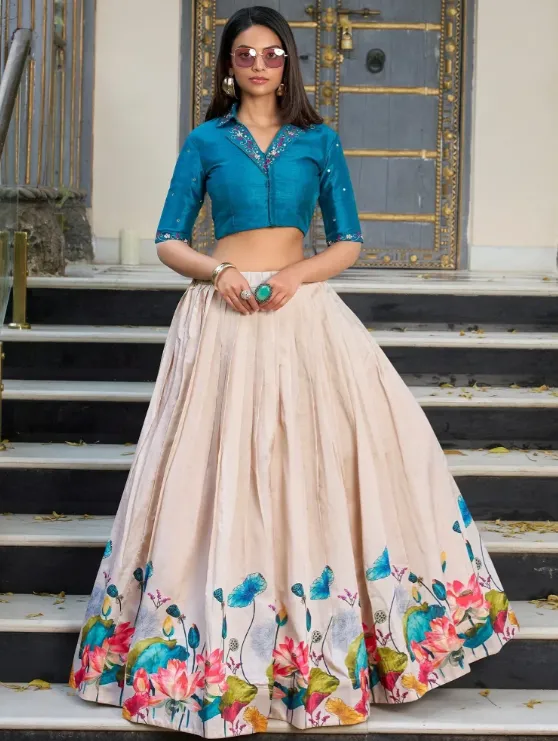
A single-colour festive outfit can look striking when texture and proportion do the work. A crop top with lehenga creates a clean two-piece silhouette that works well in a tonal palette for engagements, receptions, sangeet nights, and evening weddings.
Instead of adding several contrasting colours, monochrome styling builds interest through fabric, embroidery, jewellery, and small shifts in shade. The result feels polished without becoming predictable.
Start With Different Textures in the Same Colour Family
When the blouse and skirt sit within one colour family, texture prevents the outfit from looking flat. A smooth crop top can balance an embroidered skirt, while a detailed blouse works well with a cleaner lehenga.
You can mix matte fabric, thread embroidery, sequins, zari, or sheer layers. The colours stay connected, but the surfaces catch light differently and add depth.
Keep the Waistline Visually Clean
The meeting point between the crop top and skirt is central to the silhouette. A high-waisted lehenga usually creates a smooth line and keeps the look elegant rather than overly segmented.
Before finalising the fit, check:
- Whether the skirt sits securely at the natural waist
- How much space appears between the top and waistband
- Whether the blouse stays in place when you raise your arms
- If tassels or waist details crowd the centre
- Whether the dupatta complements the waistline
A clean middle section lets embroidery and colour stand out clearly.
Use the Dupatta to Add a Tonal Shift
A monochrome look does not require every piece to be the same shade. The dupatta can be one or two tones lighter or darker than the skirt, creating contrast while keeping the palette cohesive.
A sheer dupatta can soften a heavily embroidered set. A richer border can make a simpler outfit more formal. For a reception, an open shoulder drape can show the tonal layers, while a pinned style may be more practical for dancing.
Let Deep Green Carry the Evening Mood
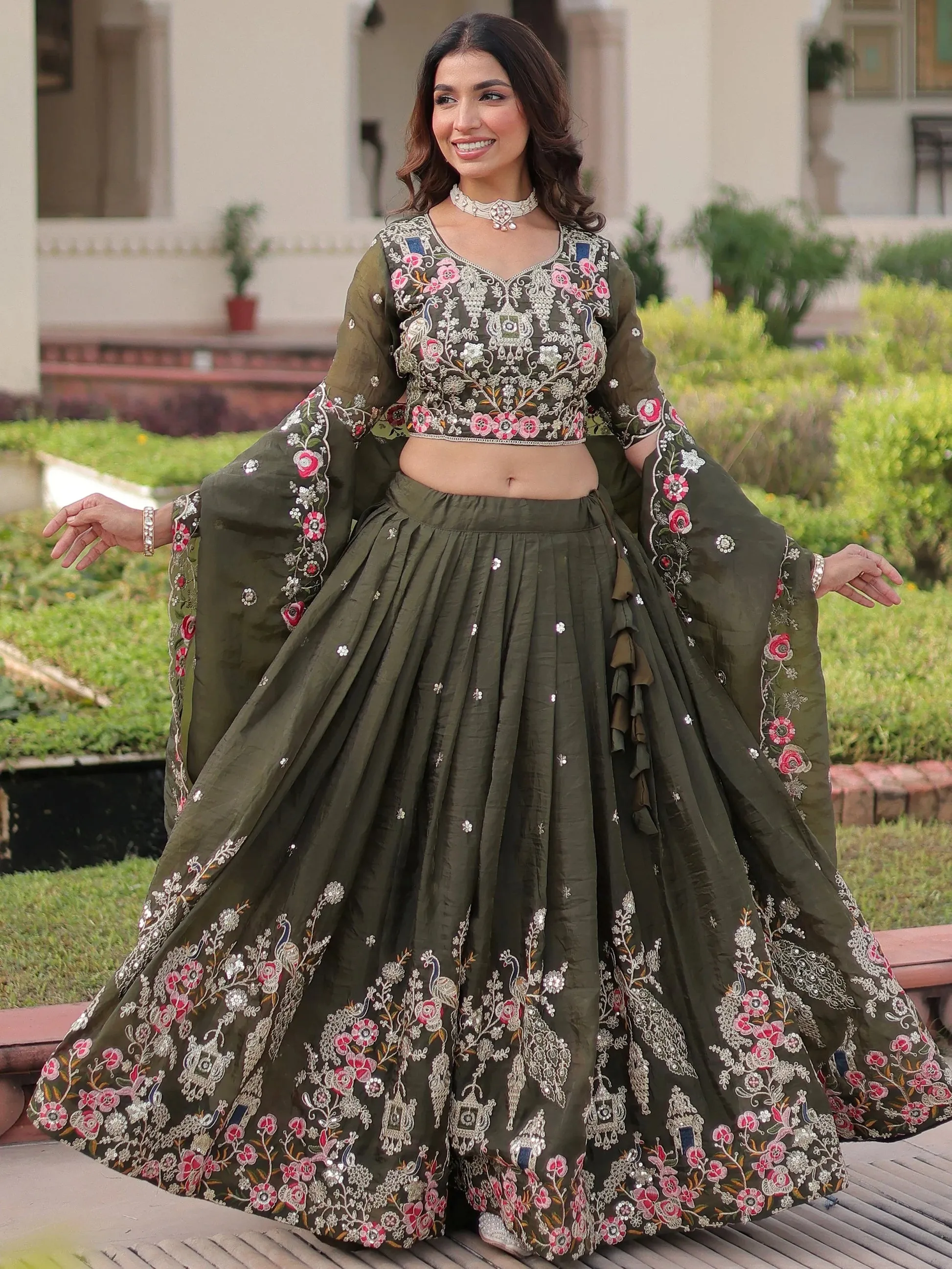
A dark green lehenga is especially effective for evening celebrations because the shade has enough depth to feel formal without depending on excessive embellishment. Bottle green, forest green, and emerald-leaning tones can each create a different mood.
Gold adds warmth and a traditional finish, while silver or crystal-like details make the palette cooler and more contemporary. Ivory, champagne, or a lighter green can also appear in small accents without breaking the tonal idea.
Under indoor lighting, deep green may appear darker than expected, so check the outfit in similar light before the event.
Choose Jewellery by Finish, Not Quantity
A monochrome outfit already creates a strong statement, so jewellery should introduce texture rather than simply more colour. The blouse neckline is the best place to start.
For a balanced finish, consider:
- Antique gold with warm green undertones
- Polki or kundan for formal wedding styling
- Pearls for a softer contrast
- Statement earrings with a high neckline
- A choker with a clean, open neckline
- One cuff or bracelet when sleeves are simple
If embroidery is dense around the neck, let the earrings lead and keep the necklace minimal.
Break the Monochrome Look With One Small Accent
Sometimes a single contrast is enough to make tonal styling more memorable. It could be a clutch, lipstick, jewellery stone, or narrow dupatta border.
Maroon, blush, ivory, or antique gold can work as accents with deep green. The important part is restraint. Repeating the contrast in one or two places creates intention; several unrelated colours weaken the monochrome effect.
This approach also helps photographs because the eye has a small point of contrast without losing the impact of the main shade.
Test the Outfit in Movement and Light
Tonal dressing depends heavily on texture, so lighting can change how the separate pieces appear. Take photographs in daylight and under indoor lighting to see whether the blouse and skirt still have enough definition.
Then walk, sit, and try a few turns in the complete outfit. Check that the skirt moves freely, the blouse remains secure, and the dupatta does not cover the details you want visible.
A final trial with the intended footwear is important because heel height affects the lehenga length and overall proportion.
Final Thoughts
Monochrome lehenga styling proves that festive dressing does not need several colours to feel expressive. Depth can come from texture, tonal variation, embroidery, jewellery, and the way each piece interacts with light.
When the waistline stays clean and one or two details provide contrast, a crop-top lehenga can feel modern and refined. Deep green makes this approach especially effective for evening celebrations, creating richness through colour rather than excessive decoration.